
Introduction
“Procrastinators end up suffering more and performing worse than other people” (Tice and Baumeister 1997).
According to So Yeon Lee, over 70% of undergraduate students report procrastinating on academic tasks (Ellis and Knaus 1977; Ferrari et al. 2007; Schraw et al. 2007; Steel 2007). At the UNE Student Academic Success Center, many incoming students have reported their concerns over successfully managing a college workload and balancing their time between academic, social, family, and work commitments. Procrastination is not only a threat to students’ academic success, it is also a form of self-harm.
This workshop helps students get control of their time by offering them proven strategies for planning a realistic schedule of working sessions to complete their work and stay on track for the semester.
Workshop Plan
- Procrastination Test
- College learning time is different from HS learning time
- Time Management Calculator
Consequences of Procrastination
- Stress
- Guilt
- Anxiety
- Poor Performance
- Self-loathing
Why People Procrastinate
- Prefer more pleasant behaviors to less pleasant ones
- People protect their mood by avoiding tasks that make them feel boredom, anxiety, insecurity, frustration, resentment, self-doubt, low self-esteem, self-blame or other negative emotions
- False belief that they’ll be better equipped to complete the task later
- Fooling themselves that they’re being productive by completing less important tasks
- Emotional dysregulation/low self-discipline
How to Stop Procrastinating
- Behavioral Strategies
- Heat Mapping
- Sample Heat Map
- Get a blank heatmap
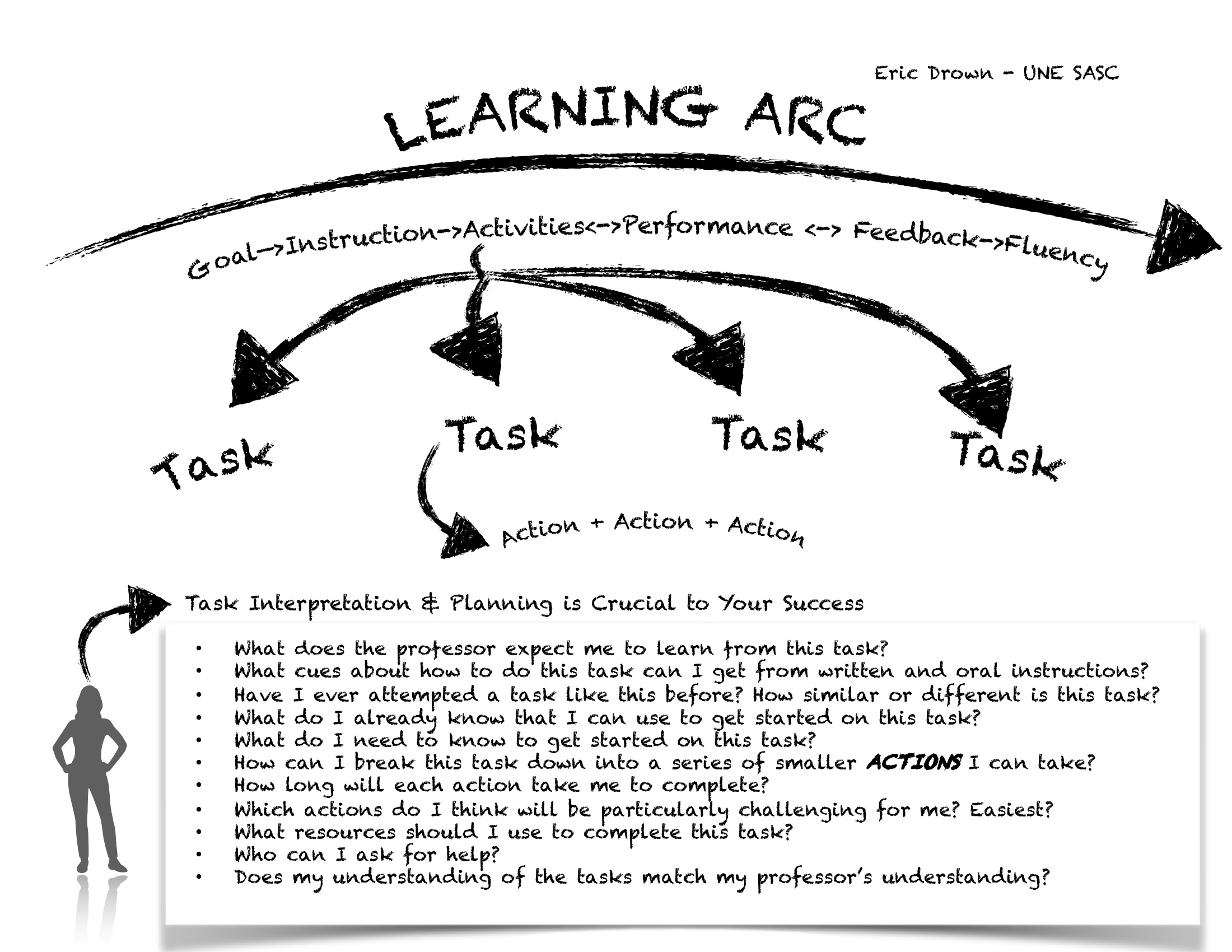
- Task Interpretation
- Backwards Planning
- Psychological Strategies
- Be Kind to Future You
- Find Personal Meaning in the Task – how is what you’re doing moving you a step closer to your goals
- Forgive Yourself for Procrastinating and Commit to Doing Better Next time
- Give Your Brain a “Bigger Better Offer” than the relief that comes with avoiding a task: imagine how you’ll feel having completed the task or remind yourself how you felt when you procrastinated in the past
Readings
- Why You Procrastinate – It’s About Managing Your Emotions Not Self-Control or Laziness
- The Science of Procrastination
- How to Beat Procrastination
- 10 Scientifically Proven Tips for Beating Procrastination
- Identify Your Most Productive Times of Day (heat mapping)
- Backward (or Reverse) Planning for Academic Success
Resources
- Planners
- MyStudyLife.com – all platforms planner app – planner, scheduler, task planning, reminder (IOS, Android, desktop/laptop)
- MyHomeworkApp.com – similar to MyStudyLife.com
- Make a “Whole-Life” Planner – why you should plan non-academic aspects of your life as well, with a template
- Simple Assignment Planner (Tik Tok) – doesn’t encourage task analysis, but some students like it
- Semester-At-A-Glance Calendar Template – see important dates for the semester “in-a-glance”
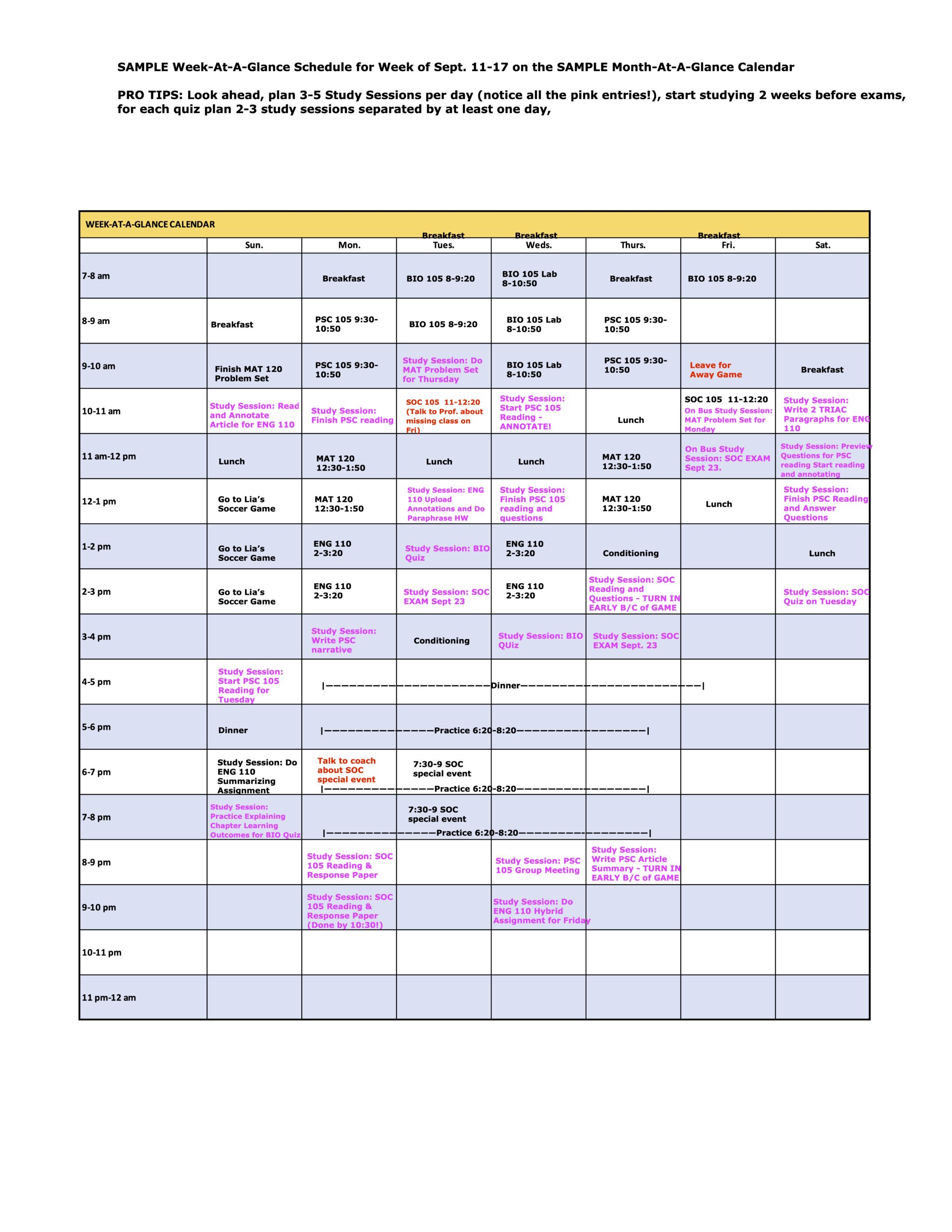
- Week-At-A-Glance Calendar Template – see important dates for the week “in-a-glance”
- SAMPLE – Filled in Month-At-A-Glance calendar
- SAMPLE – Filled in Week-At-A-Glance calendar
- Backward Planning
- Backward (or Reverse) Planning for Academic Success
- Reverse Plan for a Paper Due in 14 Days (Sample)
- Reverse Plan to Prepare for a Final Exam (Sample – Bucknell Teaching and Learning Center)
- Backward (or Reverse) Planning for Academic Success
- The Study Cycle
- The Study Cycle & Focused Study Sessions – integrate study sessions into a cycle of activities to maximize your academic success; learn how to structure your study sessions and know how many you should schedule
- Bloom’s Taxonomy
- Metacognitive Tools to Understand Where Your Time Goes
- Log Your Daily Activities – find out how you really spend your time by completing this daily log, which analyzes the amount and quality of time spent on your activities and encourages reflection
- Metacognitive Assignment Planner & Tracker – keep track of your progress on assigned work, encourages task planning and prioritizing
- Heat Mapping
- Organization, Time Management, Planning Self-Report
- Time Management Tools Usage Self-Report


:max_bytes(150000):strip_icc():format(webp)/Blooms-Graphic-1024x757-00772b45d3974746afa6aa8a34db64e6.jpg)